Reims sits 145 km east of Paris on the A4, about ninety minutes by car, which makes Champagne the closest great wine region in France to the capital. Visiting the houses of Reims and Épernay works by train; touring the vineyard villages does not, and that is what a car is for.
The short version
- Paris to Reims is 145 km, roughly one hour thirty on the A4; Épernay, in the Marne valley, is a similar distance by a slower road, and Troyes 180 km down the A5.
- Plan the cellar visits before leaving Paris: a tour and tasting at Taittinger, Ruinart or Veuve Clicquot in the chalk crayères is booked weeks ahead, and several houses close during the September harvest.
- A day trip covers Reims and its cathedral; a weekend adds Épernay, Hautvillers and the grand cru villages, with a 0.5 g per litre limit before you taste.
How far the Champagne region is from Paris, and how long the run really takes
The appellation begins under 150 km east of the Paris ring road and ends around Troyes, 180 km to the south east. That compact shape is what makes the region such a good weekend destination: nothing inside it is more than a short drive from anything else, and the whole vineyard, from Reims to the Côte des Bar, fits into two days without rushing.
Paris to Reims
Reims is 145 km from the Porte de Bercy, or about 90 miles, and the A4 covers that distance in ninety minutes in normal conditions. Leaving on a Friday evening or returning on a Sunday afternoon adds thirty to forty minutes around the eastern suburbs. If you collect the vehicle at Roissy, the airport sits directly on the route and the journey drops to around 120 km; our guide to picking up a rental at Charles de Gaulle airport covers the desks and the exit roads.
Paris to Épernay
Épernay is located 140 km away, so barely closer than Reims, but the last section is a departmental road rather than a motorway and the drive takes closer to one hour forty five. Most visitors reach Épernay through Reims on the N51, which crosses the Montagne de Reims and is far more interesting than the direct approach through Dormans.
Paris to the Côte des Bar
The southern half of the appellation, around Bar-sur-Aube and Les Riceys, lies some 200 km away on the A5 through Troyes. It is a different day out rather than an extension of the first one, and it deserves its own overnight stay.
Three ways out of Paris, and when each of these routes is worth taking
Almost everyone takes the motorway, and for a two day trip that is the right call. The alternatives matter when the road itself is part of what you came for, or when the A4 is jammed.
The A4, the fast option
The A4 leaves Paris at Porte de Bercy, passes Marne-la-Vallée and Meaux, then runs straight across the plateau of the Brie to Reims. It is a toll motorway for most of its length, dual three lanes, with service areas roughly every forty kilometres. Nothing about it is scenic, and that is the point: it buys you extra time underground.
The Marne valley on the D3
The old road along the river leaves the A4 at Château-Thierry and follows the Marne through Dormans, Port-à-Binson and Cumières before reaching Épernay. It adds fifty minutes and it is the most scenic approach to the vineyard, with the picturesque hillsides rising on both banks and villages of growers every few kilometres. Take it on the way home rather than on the way out, when there is no visit to be late for.
The A5 towards Troyes
If your target is the Côte des Bar, leave Paris on the A5 instead. It reaches Troyes in one hour forty five, and the vineyard begins another forty kilometres further south. Troyes itself, with its half-timbered old town, is worth the stop even for people who never open a bottle.
What the trip costs before you buy a single bottle
Three items make up the bill: tolls, fuel and parking. None of them is large, but travellers who budget only for the cellar visits are usually surprised by the total on the way home.
The A4 between Paris and Reims is a toll road, and the barrier is charged per section rather than at a single point. Expect an amount in the region of fifteen euros each way for a standard vehicle, revised every year on the first of February; our page on tolls on French motorways explains the badge system and how the free flow sections are billed now that several barriers have been removed.
Fuel is the second item. A return trip to Reims with a day of vineyard roads in between typically burns around thirty litres in a small petrol car, and French motorway stations are consistently the most expensive places to fill up. Filling the tank at a supermarket station before joining the A4 saves a real amount, and our guide to fuel stations in France lists which cards work at unattended pumps.
Parking is the item people forget. Central Reims is paid on street through the day, and the car parks near the cathedral fill early on Saturdays. Épernay is easier, with free parking a short walk from the Avenue de Champagne. If the vehicle spends the first night in Paris, our guide to parking in the capital is worth reading before you book a hotel without a garage.
A two day itinerary that works
This is the itinerary that most first time visitors end up with, and it holds together because it never asks the driver to cover more than thirty kilometres between two stops.
- Saturday morning, Paris to Reims. Leave the capital before nine, reach the city around eleven, park near the Porte de Mars and walk to the cathedral.
- Saturday afternoon, a cellar tour in Reims. Taittinger, Ruinart, Pommery and Veuve Clicquot all run guided visits in the chalk crayères under the Saint-Nicaise hill. Book the slot weeks in advance.
- Saturday evening, dinner in Reims. The streets around the Place Drouet-d'Erlon are full of restaurants, and this is the night to leave the car where it is.
- Sunday morning, the N51 to Épernay. Thirty kilometres through the forest of the Montagne de Reims, with a detour to Hautvillers and the abbey where Dom Pérignon was cellar master.
- Sunday midday, the Avenue de Champagne. Moët et Chandon, Perrier-Jouët, Pol Roger and De Castellane stand in a single row of nineteenth century mansions.
- Sunday afternoon, the Côte des Blancs. Cramant, Avize and Le Mesnil-sur-Oger, then back to Paris on the A4 from Épernay in a little under two hours.
Reims, the city that earns a full day
Reims is not a wine village that grew: it is a city of 180 000 people with two monuments on the UNESCO World Heritage list and a vast network of Roman chalk pits underneath it. Treating it as a stop between two tastings is the most common mistake visitors make.
The cathedral and the Palais du Tau
Notre-Dame de Reims is where the kings of France were crowned, from the twelfth century until 1825, and its west front carries the smiling angel that has become the emblem of the city. The Palais du Tau next door was the archbishop palace and holds the coronation treasury. Both were inscribed as World Heritage in 1991 together with the basilica of Saint-Remi, a Romanesque church at the other end of the historic centre.
The crayères under the Saint-Nicaise hill
The chalk crayères are pits cut by Gallo-Roman quarrymen to extract building stone, then reused from the eighteenth century onwards to store bottles at a constant ten degrees. Several historic houses open them to visitors, and the descent of a hundred steps into a cone shaped chamber thirty metres deep is the part of the trip people describe afterwards. These crayères were added to the World Heritage list in 2015 as part of the hillsides, houses and cellars of Champagne.
A short history of the vineyard you are crossing
The history of the region explains almost everything you see from the road. Vines were planted here in Roman times, and the chalk they sit on is the seabed of an ancient ocean, which is why the soil is white where a plough has turned it and why the chalk galleries stay cool without machinery.
The wine was still and mostly red until the seventeenth century. Dom Pérignon, cellar master at the abbey of Hautvillers from 1668, did not invent the bubbles, but he built the blending method that the region still uses: assembling wines from different villages and different grape varieties into something better than any of them alone. The great maisons of Reims and Épernay were founded a century later, and the culture of champagne as a celebration wine was largely their commercial invention.
Three grape varieties cover almost the whole appellation. Chardonnay dominates the Côte des Blancs, Pinot Noir the Montagne de Reims and the Côte des Bar, Meunier the valley of the Marne. Three hundred and nineteen villages are classified, of which seventeen carry grand cru status and forty two premier cru, and those village names are painted on the road signs you pass all weekend. The 34 000 hectares of vines and the galleries beneath them make this one of the most renowned wine landscapes in the world, and since 2015 a recognised part of world heritage.
Épernay and the Avenue de Champagne
Épernay calls itself the capital of champagne and has the address to prove it. The Avenue de Champagne is a straight prestigious street lined with the mansions of the great houses, built above more than a hundred kilometres of galleries dug into the chalk. Moët et Chandon alone owns some twenty eight kilometres of them.
The town is smaller and quieter than Reims, and it is the better base for a second night if the vineyard rather than the cathedral is what brought you. Parking near the tourist office is straightforward, most of the visits start within three hundred metres of it, and the prestigious slopes of the Côte des Blancs begin at the end of the avenue. De Castellane adds a tower with a beautiful view over the roofs, which is the cheapest way to understand how the vineyard wraps around the town.
Épernay is also where the two halves of the region meet. North of the town the Montagne de Reims grows mostly Pinot Noir and Meunier; south of it the Côte des Blancs is planted almost entirely with Chardonnay. The two are fifteen kilometres apart and the change in the landscape is immediate.
Which champagne houses you can visit, and how a visit is booked
Roughly three hundred houses and several thousand growers make champagne, and only a fraction receive visitors. They fall into two groups, and a good weekend takes in one of each.
The large maisons in Reims and Épernay run scheduled cellar tours several times a day, in French and in English, lasting between sixty and ninety minutes and ending with one or two glasses. Taittinger, Ruinart, Veuve Clicquot, Pommery, Moët et Chandon and Mercier all work this way. A reservation is made online, weeks ahead for a Saturday, and the price of a tour typically runs from twenty five to sixty euros depending on what is poured at the end. Ruinart, the oldest of these prestigious maisons, limits numbers tightly and is the hardest slot to obtain.
The growers are the reason to have a car. A récoltant manipulant makes wine only from the parcels the family owns, often a few hectares in one or two villages, and a visit there is a conversation in a working cellar rather than a guided tour. Most do not offer scheduled slots: you send a request by email a week before, and someone opens the cellar door for you. The tourist offices in Reims and Épernay both provide lists, and the vineyard villages carry signs at their entrance naming the growers who receive visitors. These small wineries are where a weekend stops being a museum visit.
Two practical points. Very few houses are open on Sunday afternoon, so the second day of a weekend is better spent exploring the vineyard roads than on a booked visit. And a tasting at a grower usually ends with the chance to buy at the cellar door, which is the only place where the price is the producer price.
The vineyard roads, where the driving is actually beautiful
The signposted Route Touristique du Champagne runs for some seven hundred kilometres and splits into four loops. Each has its own character, and you will not explore more than one properly in a day.
The Montagne de Reims loop climbs into a forested plateau between Reims and Épernay, through Verzenay with its lighthouse and windmill, Verzy with its twisted beech trees, and Bouzy. Much of it lies inside a regional natural parc, so the vines stop at the treeline and the views open suddenly. The Côte des Blancs runs south from Épernay along a single escarpment through Cramant, Avize and Le Mesnil-sur-Oger, three grand cru villages where Chardonnay covers every slope in the same direction.
The Vallée de la Marne follows the river west of Épernay through Hautvillers, Cumières and Damery. Hautvillers is the picturesque village of the region, with wrought iron signs on every house and a beautiful view over the river from the abbey. The short climb up to the Hautvillers belvedere is the single best stop of the weekend for anyone with a camera. The fourth loop, the Côte des Bar around Les Riceys and Bar-sur-Aube, is two hours further south and feels closer to Burgundy than to Reims.
These are narrow scenic roads with tractors on them in season, blind crests and no hard shoulder. A compact car is far more comfortable here than a large estate, and the mapping applications lose signal in the folds of the Montagne; our guide to navigation in France explains how to download the area before leaving. The main speed limit on these departmental roads is 80 km per hour unless a sign says otherwise, and our page on French speed limits sets out the rules that apply to a rental vehicle.
Where to eat between two tastings
Food matters more here than in most wine regions, because champagne is drunk with a meal far more often than the tourist image suggests, and because the day at the wheel is long.
Reims is the serious address. The city has a genuine restaurant scene, from the brasseries around the Place Drouet-d'Erlon to the tables of Les Crayères, and the local food is richer than the wine leads people to expect: ham cooked in pastry, pink biscuits made to be dipped, chaource and langres cheeses from the neighbouring Aube. Épernay offers fewer places but they sit within walking distance of the avenue, which matters when the vehicle is parked for the night.
In the villages, the choice is a handful of auberges and the occasional cafe that serves a plate at midday, and almost all of them stop serving lunch at two. Book, or plan to arrive early. A grower will typically pour a glass with a plate of local cheese if you ask, and one village cafe with a good list is worth more to a driver than a starred table an hour away.
One habit to pick up: order champagne by the glass rather than the bottle at lunch. It is normal here, every restaurant offers it, and it keeps a tasting day compatible with the drive back.
Tasting and driving, the rule that shapes the whole day
This is the single decision that changes how a champagne weekend is organised, and it is better made in Paris than in a tasting room.
The French limit is 0.5 g of alcohol per litre of blood, which is 0.25 mg per litre of exhaled air. For anyone holding a licence obtained less than three years ago, the limit drops to 0.2 g per litre, a figure that a single glass can reach. Enforcement around the vineyard is real: the gendarmerie runs checks on the roads out of Épernay and Reims on weekend afternoons, precisely because the region attracts people who have been tasting. Our page on licence requirements in France explains which documents you must carry with a rental car.
Three arrangements work. The first is a designated driver who tastes nothing, which is straightforward and slightly unfair. The second is the spittoon: every cellar will provide one, using it is completely normal, and a guided visit that ends with two pours can be followed without swallowing any of them. The third is to leave the vehicle at the hotel for one of the two days and hire a private driver for the afternoon.
That last arrangement is a real market in the region, and it is worth knowing what the options are. A private transfer from Reims to a handful of growers and back is charged by the half day, well above the fuel it replaces, but it removes the question entirely for the day when everyone wants to drink. Several operators also run a transfer straight from Paris with a chauffeur included, for visitors who want a single day in the vineyard with no driving at all. A chauffeur booked for a full day in the vineyard is the premium version of the same idea, and in a group of four it is not far from the cost of a second hotel night.
Visiting Champagne without a car, and what you give up
You can reach the region without driving, and for some trips it is the better answer. What no other form of transportation gives you is the vineyard itself.
The TGV from Paris Gare de l'Est reaches Reims Centre in forty five minutes, which is faster than any car will ever manage. Épernay is served by regional trains from the same station in around one hour fifteen. Both stations are in the centre of their town, so a weekend built entirely around the big houses in Reims, or entirely around the Avenue de Champagne in Épernay, works perfectly well by train.
What fails is everything in between. There is no useful public transportation from Épernay to Cramant, from Reims to Verzenay, or from anywhere to a grower three kilometres outside a village of four hundred people. Buses exist, they run twice a day and not at all on Sunday. Taxis are scarce outside the two towns and expensive over these distances, and the chauffeur and transfer services that fill the gap are priced for groups rather than for two people travelling alone.
The pragmatic middle way is to travel by train and hire the vehicle on arrival. Both Reims and Épernay have rental desks available in town, the daily price in a provincial branch is usually below the Paris price for the same category, and you skip the motorway leg in both directions. It is the same logic we set out for the chateaux of the Loire valley, where a car only becomes useful once you have left the main line. If you would rather stay west of Paris, our Normandy road trip is built on the same principle.
When to go, and the weeks to avoid
The vineyard receives visitors from March to December, and the experience changes considerably across those months.
May and June are the easiest: the vines are green, the days are long, the roads are empty and every house has slots. July and August bring the tourists, and the light on the Côte des Blancs in the late afternoon is worth the crowds. September is harvest, and Champagne is the one French region where the grapes must legally be picked by hand, so the vineyard fills with thousands of seasonal pickers, tractors block the small roads, and a good number of growers are closed to visitors altogether for the three busiest weeks of September.
October is the quiet reward. The harvest is over, the leaves turn yellow across the whole Montagne, the growers have time again, and hotel prices fall back. If you can only choose one month for this trip, choose October. From late December to February many small growers are closed entirely, the large houses in Reims keep shorter opening times, and the vineyard is a brown grid under a low sky, which has its own appeal but is not what most people search for.
One date to keep in mind whatever the season: almost everything in France closes on Sunday afternoon and much of it on Monday. A Saturday and Sunday trip should put the booked visits on the Saturday. Whichever month you pick, continue past the first village you like the look of, because the next one is four kilometres away and usually quieter.
Questions drivers ask before leaving Paris
- How long does it take to drive from Paris to Champagne?
- Reims is ninety minutes from Paris on the A4 in normal traffic, and Épernay around one hour forty five because the last section is a departmental road. Allow an extra thirty minutes on Friday evenings and Sunday afternoons.
- Can you visit Champagne without a car?
- Yes for the two towns: the TGV reaches Reims in forty five minutes and the big champagne houses are walkable from the station. No for the vineyard, where the growers and the villages have almost no public transport and taxis are scarce.
- Do you need to book a cellar visit in advance?
- Yes for the large houses, where Saturday slots are taken weeks ahead. Growers usually answer an email request within a few days, but very few of them receive visitors without notice.
- What is the drink driving limit if I am tasting?
- The limit in France is 0.5 g of alcohol per litre of blood, and 0.2 g for anyone whose licence is less than three years old. Every cellar provides a spittoon, and using it during a guided tour is entirely normal.
- What does a weekend in Champagne cost to drive?
- Around fifteen euros of tolls each way on the A4, roughly thirty litres of fuel for the return trip with a day of vineyard roads, and paid street parking in central Reims. Cellar tours are charged separately, typically twenty five to sixty euros a person.
- Which is the best month to drive through the vineyard?
- October, once the harvest is finished: the leaves turn across the whole Montagne de Reims, the growers have time to receive visitors again, and hotel prices drop. May and June are the alternative if you want long days.
Choosing the car and collecting it in Paris
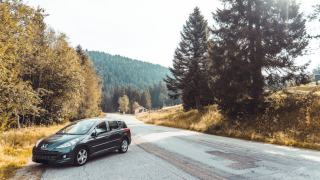
The vehicle that suits this trip is not the one most visitors reserve. The vineyard roads are narrow, the villages have tight corners and stone walls, and the car parks in Reims are underground and low. A compact or a small estate is the right size, and a large SUV is a liability on the Route Touristique.
Where you collect it matters as much. Taking delivery in central Paris means crossing the city to reach the Porte de Bercy, so an early Saturday start is the difference between a smooth exit and a slow crawl across the city; our page of tips for driving in Paris covers the junctions that catch visitors out. Collecting instead at one of the Paris airports puts you on the A4 almost at once if you are arriving by air, and Roissy is on the right side of the city for a journey east.
Two administrative points close the list. A Crit'Air sticker is required to drive inside the low emission zones that now cover several French cities, and the rules change often enough that they are worth checking a few days before departure; our page on the Crit'Air sticker keeps the current position. And an automatic gearbox remains a minority of the French fleet, so if nobody in the group drives a manual, reserve one early rather than hoping at the desk, as our guide to renting an automatic in France explains.
Book the vehicle, book the Saturday cellar tour, and leave the Sunday free for the vineyard. That order is what separates a champagne weekend that works from a weekend spent chasing appointments. Enjoy your trip, and keep one seat in the boot for the bottles.