
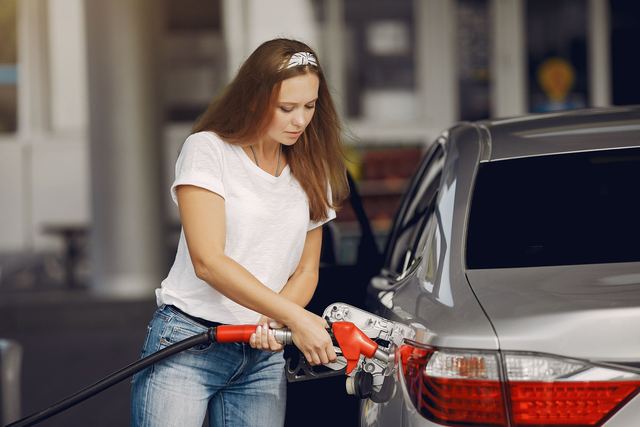
A car rental fuel policy is the rule that fixes the fuel in the tank at pickup and at return. At Paris airport desks, Europcar, Hertz and Enterprise apply a full-to-full car hire fuel policy by default, and each rental company sells a prepaid tank as an option.
Full-to-full is cheapest, prepaid rarely pays
- Full-to-full is the cheapest fuel policy for most trips: you pay only for the fuel you use, at pump prices.
- A prepaid tank only pays off if you bring the car back almost empty, and unused fuel is usually not refunded.
- The refuelling charge for a car returned short of fuel is set by the rental company, not by the pump price: read it in the rental agreement.
- Keep the receipt of a petrol station close to the airport as proof of a full tank.
What is a fuel policy on a rental car?
A fuel policy is a clause of the rental agreement. It tells you the fuel level at pick-up, the fuel level expected at drop-off, and the price you pay if the two do not match. Every car rental company publishes its own policies in its terms and conditions, and the same brand can apply a different fuel policy from one country to another, or even from one airport desk to a city branch.
The clause matters because fuel is the one cost of a car hire that the headline rate does not show. Two offers at the same daily price can end up far apart once the fuel charge is added. That is why comparison sites display the fuel policy next to the price, and why a cheap rental with a poor fuel policy is often not cheap at all. If you are comparing offers, our breakdown of the real costs behind a cheap car rental in Paris shows where the other extras hide.
On a French rental, the fuel level is noted on the check-out sheet, usually as a fraction of the gauge (full, 3/4, 1/2). Photograph the dashboard with the fuel gauge and the mileage before you drive away: it is the simplest evidence you can have if the level is disputed later.
How does each car rental fuel policy work?
Four fuel plans cover almost every car hire in Europe. The names change from one rental company to the next, but the mechanics stay the same.
Full-to-full
You collect the car with a full tank and you bring the car back with a full tank. You pay for the fuel you actually burn, at the price of the petrol station you choose. This is the default fuel policy at Europcar, Hertz, Enterprise, Avis and Sixt in France for standard bookings. If the tank is not full when you return the vehicle, the company tops it up and adds a refuelling service fee on top of the litres, which is why the missing fuel costs far more than at the pump.
Prepaid fuel (fuel purchase option)
You buy a full tank of fuel at the desk when you collect the car, and you can bring the car back at any fuel level. Hertz and Enterprise call it a fuel purchase option; other brands use names such as fuel service or pre-paid fuel. The price per litre is set by the company and is often close to local pump prices, but there is usually no refund for fuel left in the tank. The option only makes sense if you are sure to use the whole tank, for example on a long road trip with an early flight home.
Full-to-empty
You pay for a full tank at pick-up, plus a service fee, and you are asked to return the car as empty as you can. Any fuel left over is lost. This fuel policy is common with some low-cost brands in Spain and at a few holiday airports, and it is the one travelers complain about most in reviews, especially after renting on Mallorca or another sunny destination where the local low-cost fleet is large. It is rare at Paris desks, but it still appears on some broker offers, so check the booking terms before you pay.
Same-to-same
You receive the car with a partial tank, for example half full, and you must return it at the same fuel level. It sounds fair, but hitting an exact level on a gauge is hard, and any shortfall is charged at the refuelling rate. Take a clear photo of the gauge at pick-up.
| Fuel policy | Tank at pick-up | Tank at drop-off | What you pay for fuel |
|---|---|---|---|
| Full-to-full | Full | Full | Only what you use, at pump prices |
| Prepaid (purchase option) | Full | Any level | A full tank at the company price, usually no refund |
| Full-to-empty | Full | As empty as possible | A full tank plus a service fee, no refund |
| Same-to-same | Partial | Same partial level | What you use, shortfall charged at the refuelling rate |
Do I need to return the car full?
Under a full-to-full policy, yes: the car must come back with the gauge on full. Most companies accept a car refuelled at a station within a short distance of the return location, and some staff check the needle rather than the receipt. Keep the receipt anyway, with the station address and time, because it is your proof if the rental company later says the tank was short.
Plan the last fill before you reach the airport. Around Charles de Gaulle and Orly the motorway stations are easy to find but tend to be pricier than supermarket stations a few kilometres away. Our guide to petrol stations in France, fuel types and payment explains how automatic pumps accept foreign cards, and which fuel your rental car needs. A diesel van and a petrol city car do not take the same nozzle, and a wrong fuel is never covered by the standard insurance.
Under a prepaid or full-to-empty policy, you do not need to refuel at all before you return the vehicle. Under same-to-same, aim slightly above the level noted at pick-up.
What happens if I return the car with missing fuel?
The company refuels the car itself and bills you for the missing fuel, at a rate per litre it sets, plus a refuelling service fee. Both amounts are listed in the rental agreement or in the price list at the desk, and they are well above what the petrol station would have charged. The charge is taken from the credit card used as a deposit, often a few days after the rental ends.
If you think you were charged by mistake, contact the rental company with your photo of the gauge and your fuel receipt. Customer service teams at Europcar, Hertz and Enterprise handle this kind of claim routinely. If the car was booked through a broker, contact the broker too: it is often the party that sold you the fuel policy in the first place. Some excess insurance products sold by brokers do not cover fuel charges, so do not count on them.
How fuel policies differ in France, Spain and Germany
Travelers who drive across borders, or who rent a car in several countries on the same trip, notice that the default fuel policy is not the same everywhere.
- France: full-to-full is the norm at Paris airports and city branches, with a prepaid option offered at the counter.
- Spain: full-to-full is widespread with the major brands, but full-to-empty offers are still common with low-cost companies at holiday airports such as Malaga, Alicante or Palma. Spain is where most fuel complaints come from.
- Germany: full-to-full is the standard at German airport and station desks, and German rental companies tend to bill a missing litre at a high rate.
If you pick up a car in Paris and drop it off in Germany or Spain, the fuel policy of the pick-up branch applies to the whole rental, and a one-way fee is added. Our page on driving a rental car abroad from France lists the cross-border rules. In Germany you will also meet different fuel names at the pump, so check the label before filling the tank.
How to save money on fuel policies
A few essential tips keep the fuel line of your car rental bill close to zero surprises, whatever your destination and whatever the local rules.
- Filter by fuel policy when you book. Most booking sites let you show full-to-full offers only. A slightly higher daily rate with full-to-full often costs less than a cheap rate with full-to-empty.
- Refuse the prepaid tank unless you will use it all. Staff sometimes present the purchase option as an upgrade or a convenience; it is an extra.
- Check the fuel level before leaving the car park. If the gauge is not on full under a full-to-full policy, go back to the desk and have it noted.
- Compare fuel prices. The French government site prix-carburants.gouv.fr shows live prices at every station, so you can find a cheap one near your return location.
- Allow time. Most extra fuel charges come from travelers who ran out of time before a flight. Build a 20-minute margin into the driving time to the airport, and use a navigation app to locate a gas station on the way.
Your choice of vehicle matters too. A diesel or hybrid car keeps fuel consumption low on long motorway trips, and an electric vehicle removes the fuel policy altogether, replacing it with a charge level rule. A van or a 9-seat minivan burns far more, so a full van tank is a bigger sum to get wrong: if you hire a van for a family trip, the full-to-full choice matters even more. Local branches with a small fleet sometimes hand over a van that is not full; have it written on the pickup sheet before driving away. If you are collecting at CDG, Orly or Beauvais, our Paris airport car rental guide shows where each company has its desk and its return car park.
Which fuel policy is best for my rental?
For a city break, a business trip or any rental where you drive less than a full tank, full-to-full is the best fuel policy: it is the only one where you pay for exactly what you use. For a long road trip where you will empty the tank several times and must return the car at dawn, a prepaid fuel purchase can save time, though rarely money. Full-to-empty is almost never worth it. Whatever you choose, read the fuel clause in the rental terms before you sign, and learn the refuelling charge in advance: it is the number that decides what a mistake will cost.
Refuelling brands, prepaid refunds and insurance cover
- Can I refuel a rental car with any fuel brand?
- Yes. Any station works as long as you use the fuel type written on the fuel cap or in the rental agreement.
- Is the prepaid fuel refunded if I return the tank half full?
- Usually not. Most companies keep the unused fuel, so a prepaid tank only pays when you return the car nearly empty.
- Does car hire insurance cover fuel charges?
- No. Fuel and refuelling fees are outside damage and theft cover, including most excess insurance sold by brokers.